Claude Build Day · Claude Creator Commons · Bengaluru · 26–27 Sept 2026
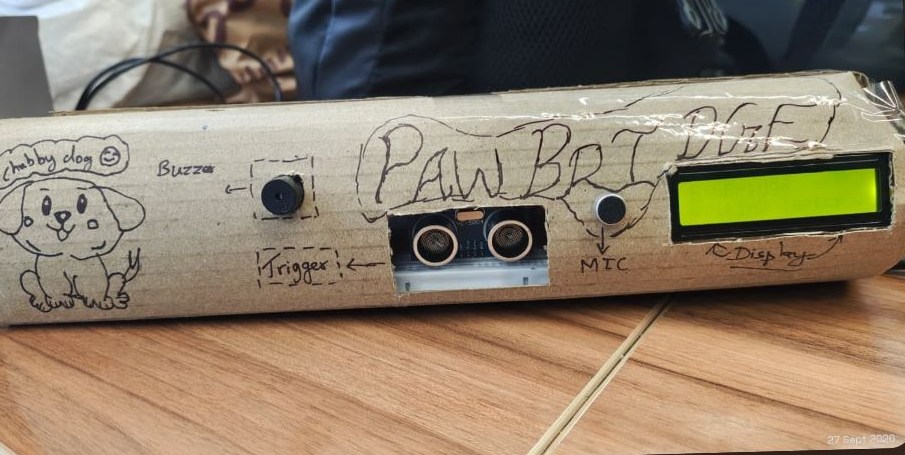
PawBridge
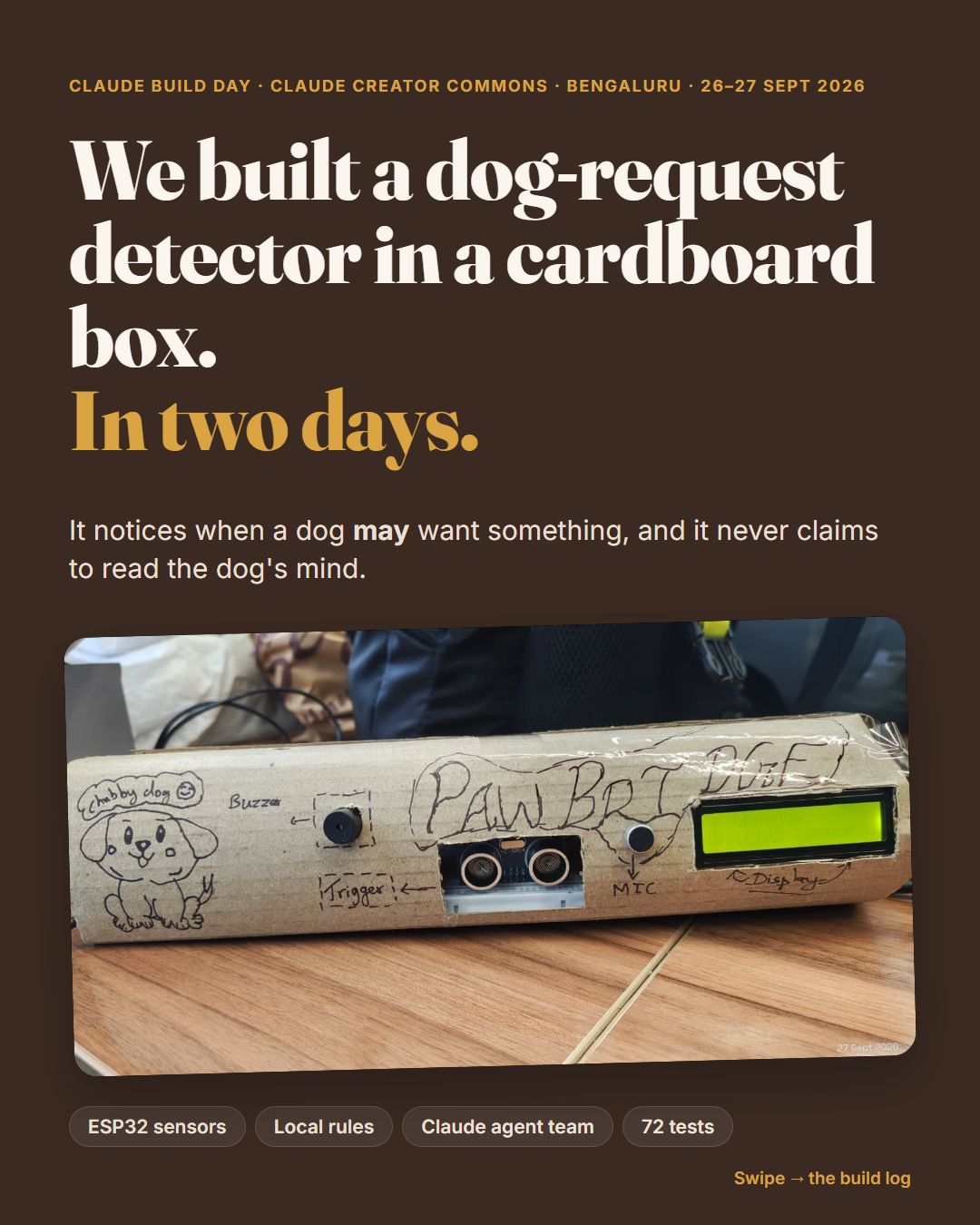
We built a dog-request detector in a cardboard box. In two days.
It notices when a dog may want something, and it never claims to read the dog's mind. PawBridge isn't a “dog translator”: it collects signals from sensors and video, reasons over the available evidence, and tells you what it observed, what it might mean, and how confident it is.
48 h
idea to demo
4
builders
~17 s
trigger to answer
72
passing tests
the problem.
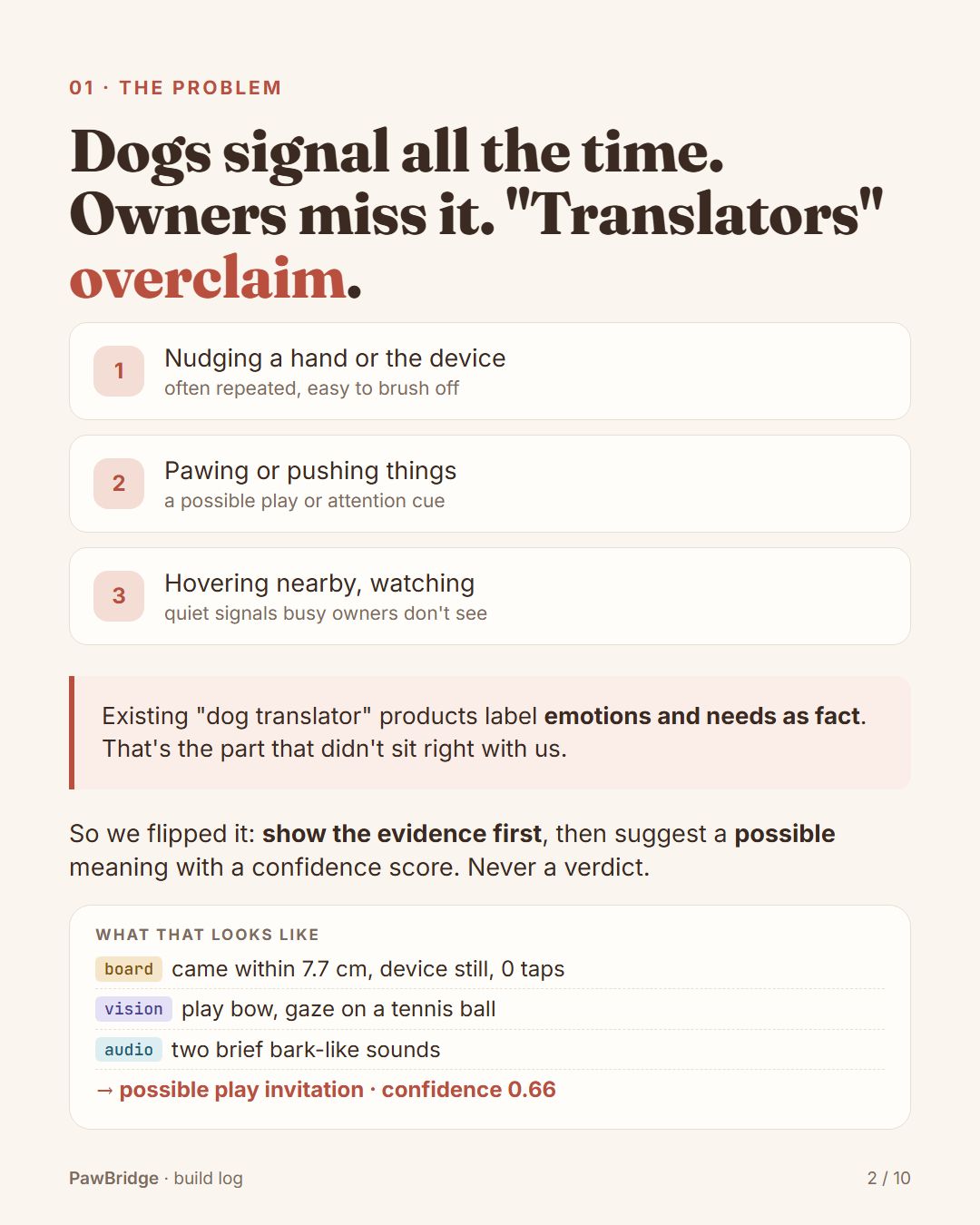
Dogs signal all the time. Owners miss it. “Translators” overclaim.
- 1
Nudging a hand or the device
often repeated, easy to brush off
- 2
Pawing or pushing things
a possible play or attention cue
- 3
Hovering nearby, watching
quiet signals busy owners don't see
Existing “dog translator” products label emotions and needs as fact. That didn't sit right with us. So we flipped it: show the evidence first, then suggest a possible meaning with a confidence score. Never a verdict.
What that looks like
- boardcame within 7.7 cm, device still, 0 taps
- visionplay bow, gaze on a tennis ball
- audiotwo brief bark-like sounds
- → possible play invitation · confidence 0.66
the build.
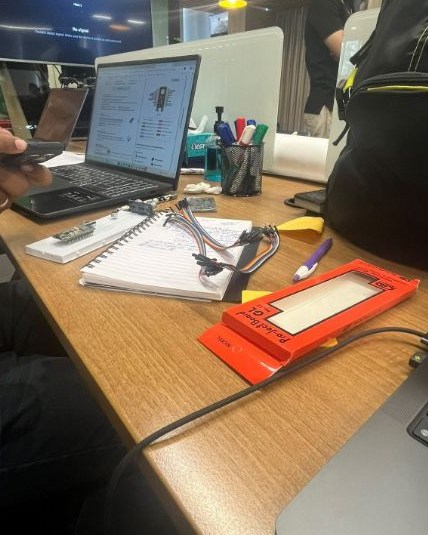
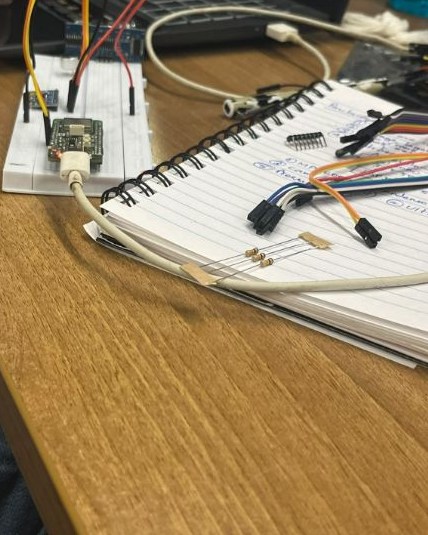
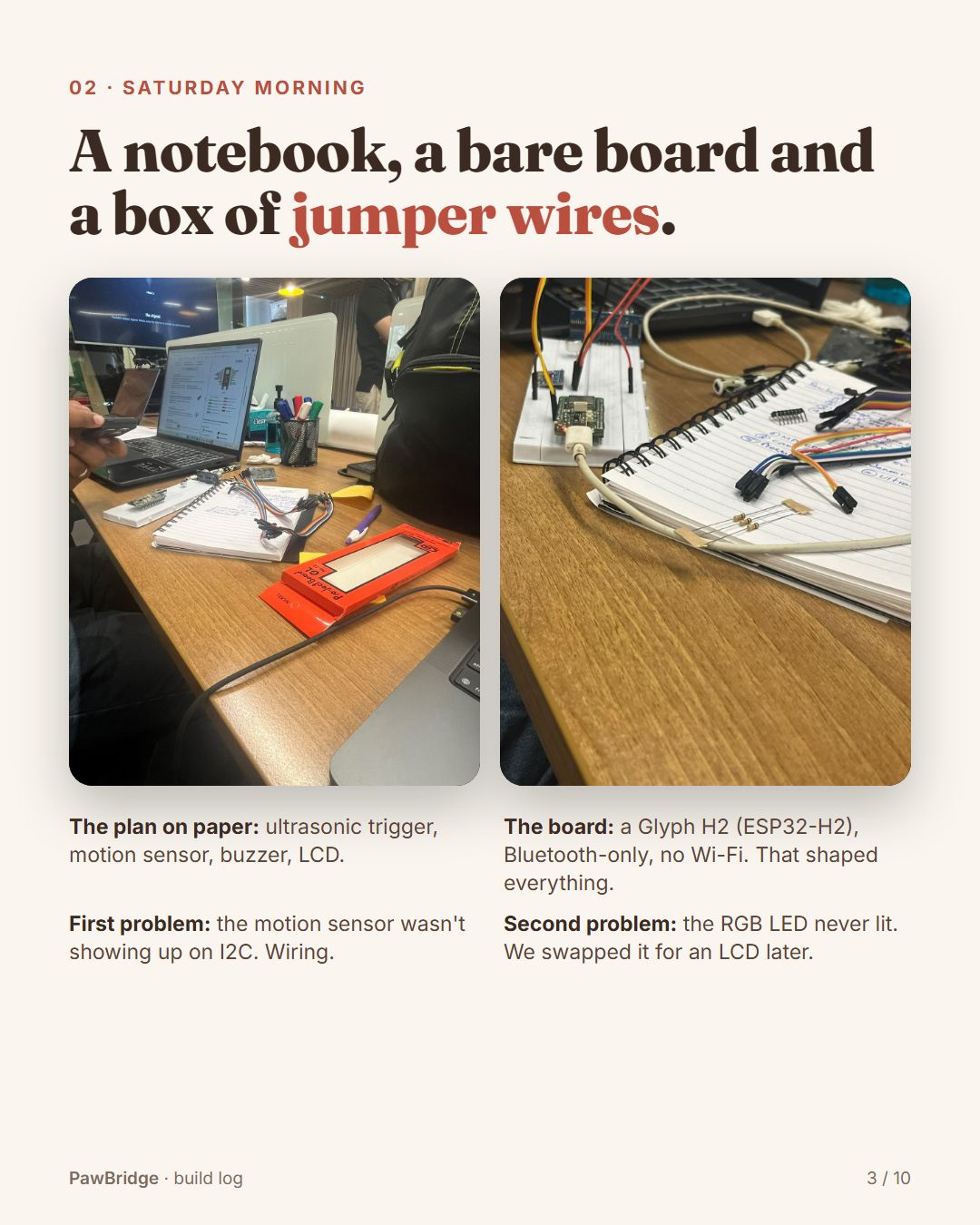
Saturday morning
A notebook, a bare board and a box of jumper wires.
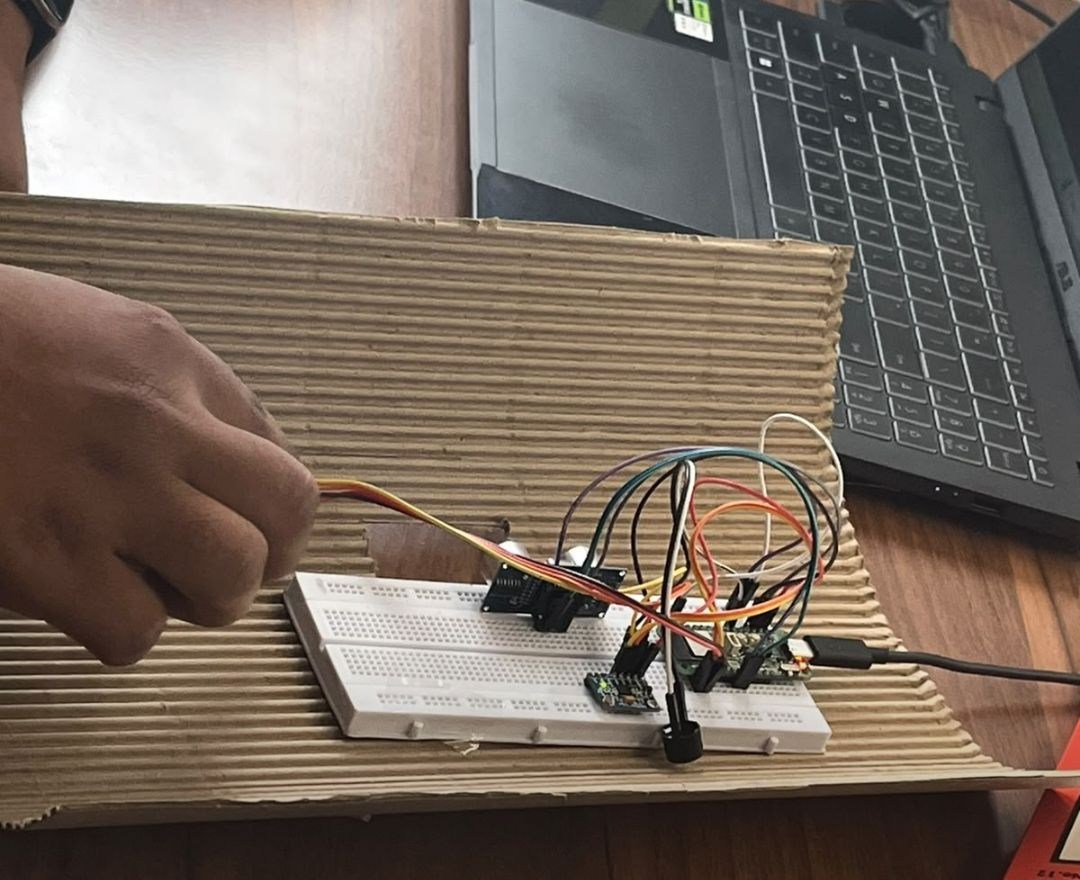
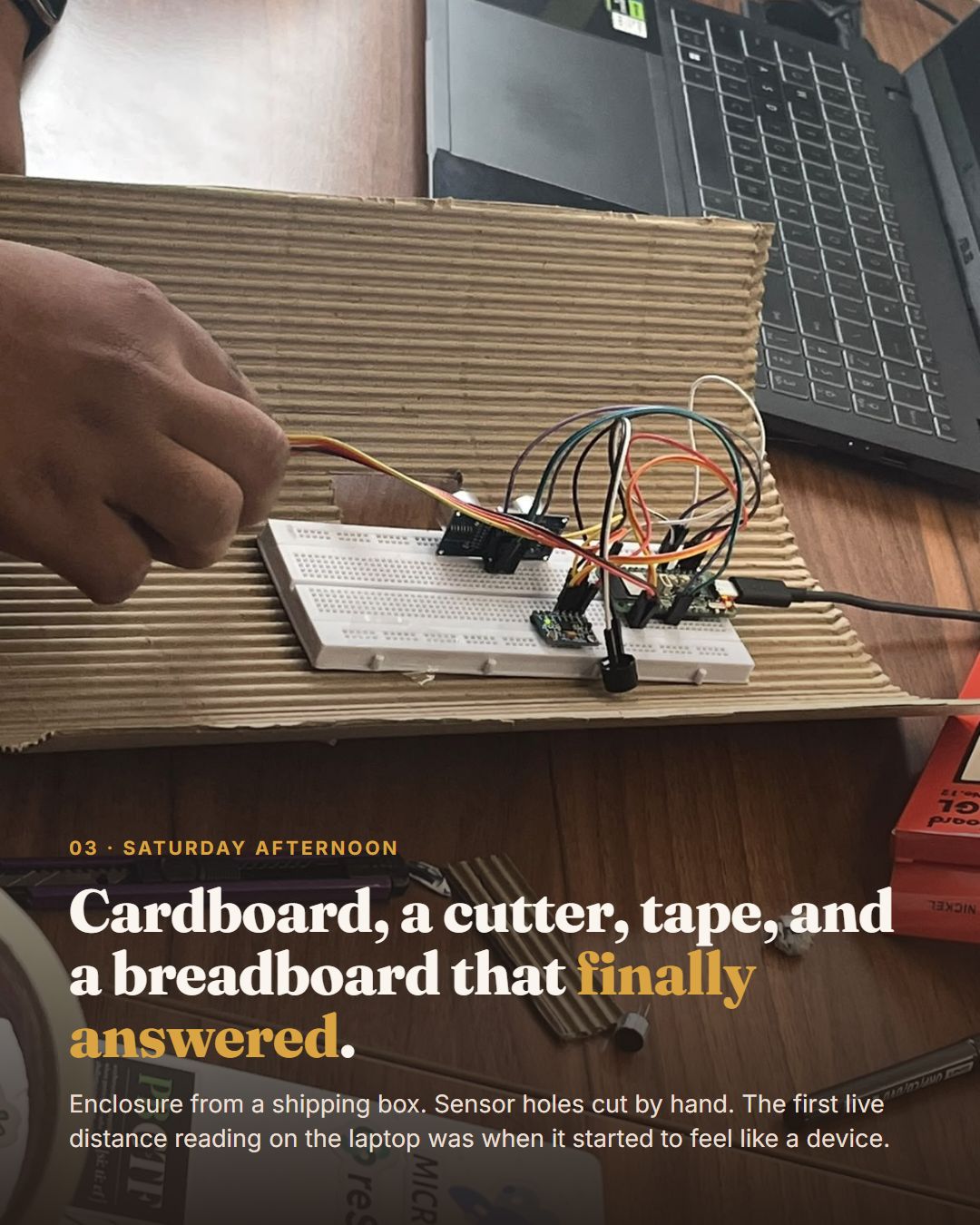
Saturday afternoon
Cardboard, a cutter, tape, and a breadboard that finally answered.
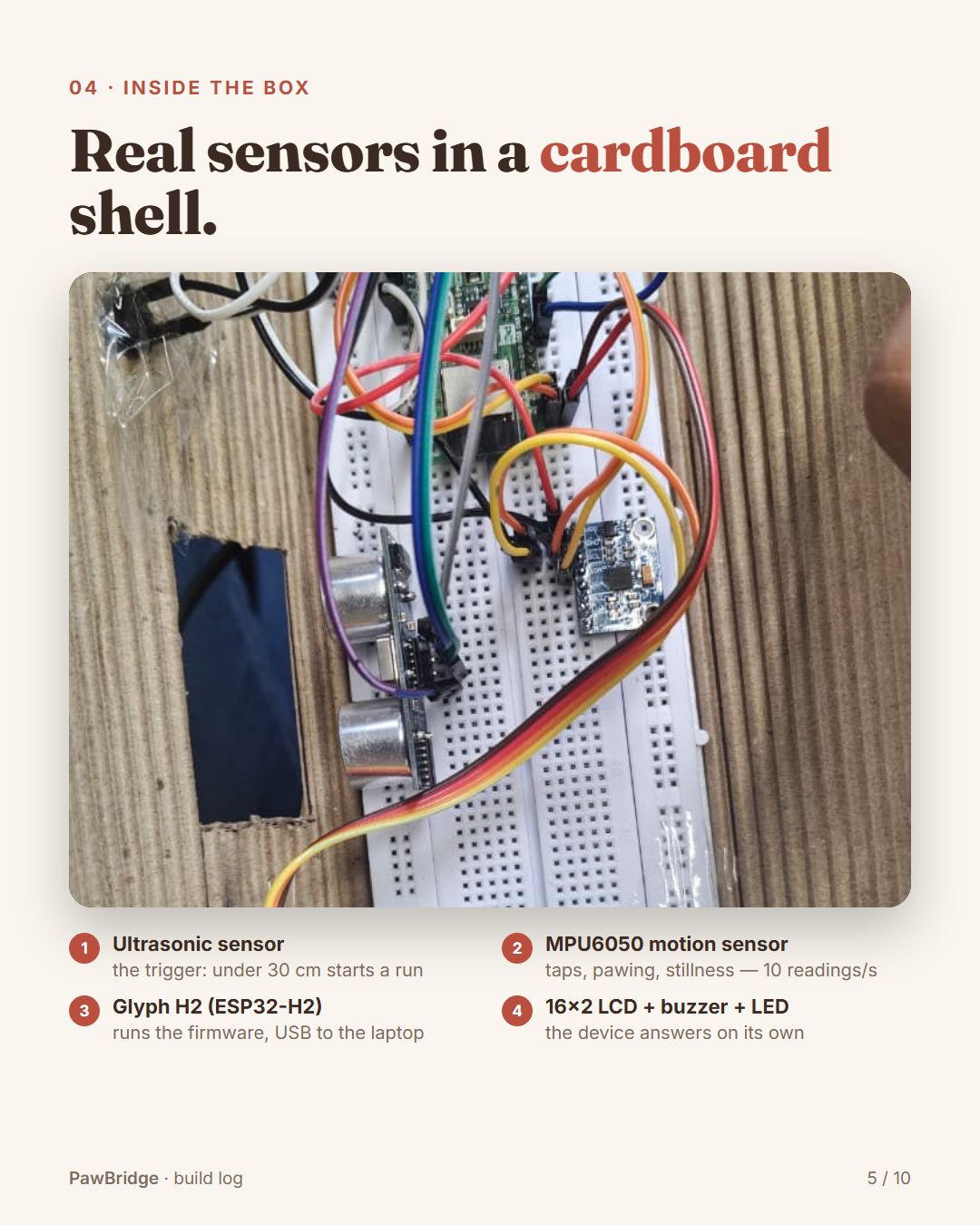
inside the box.
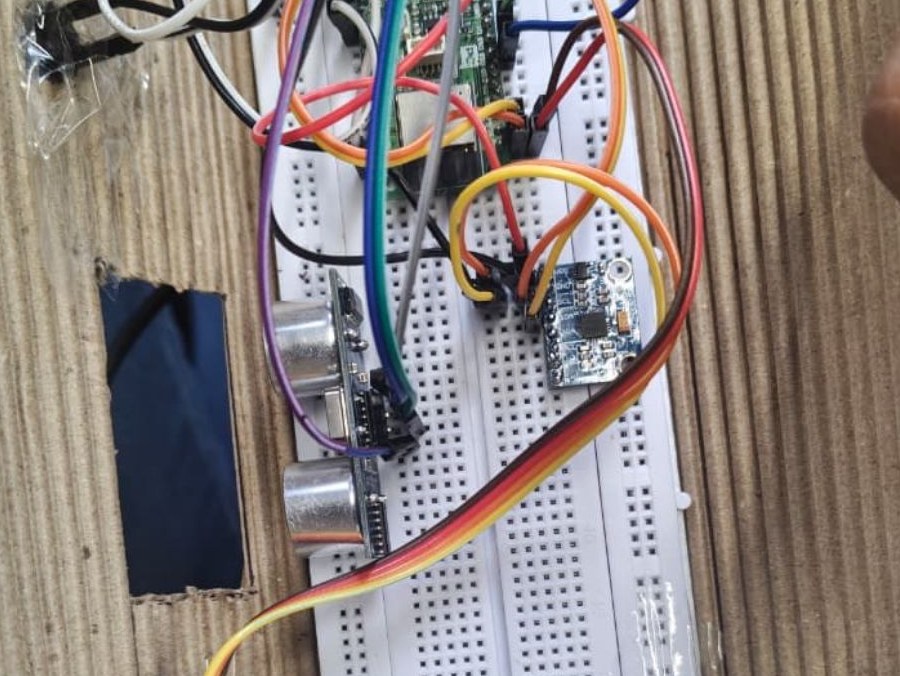
- 1Ultrasonic sensorthe trigger: under 30 cm starts a run
- 2MPU6050 motion sensortaps, pawing, stillness — 10 readings/s
- 3Glyph H2 (ESP32-H2)runs the firmware, USB to the laptop
- 416×2 LCD + buzzer + LEDthe device answers on its own
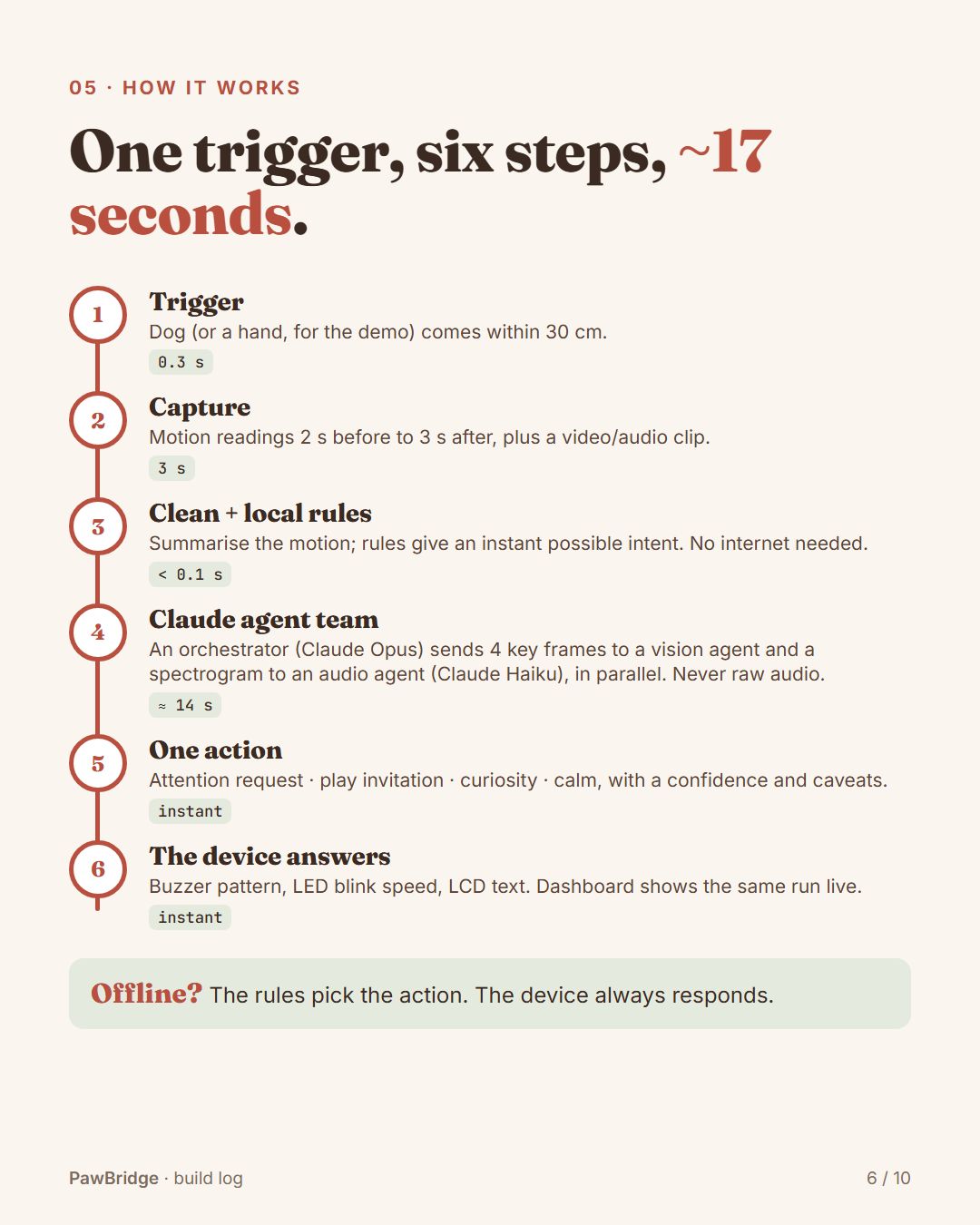
how it works.
One trigger, six steps, ~17 seconds.
- 1
Trigger
0.3 sDog (or a hand, for the demo) comes within 30 cm.
- 2
Capture
3 sMotion readings 2 s before to 3 s after, plus a video/audio clip.
- 3
Clean + local rules
< 0.1 sSummarise the motion; rules give an instant possible intent. No internet needed.
- 4
Claude agent team
≈ 14 sAn orchestrator (Claude Opus) sends 4 key frames to a vision agent and a spectrogram to an audio agent (Claude Haiku), in parallel. Never raw audio.
- 5
One action
instantAttention request · play invitation · curiosity · calm, with a confidence and caveats.
- 6
The device answers
instantBuzzer pattern, LED blink speed, LCD text. Dashboard shows the same run live.
Offline? The rules pick the action. The device always responds.
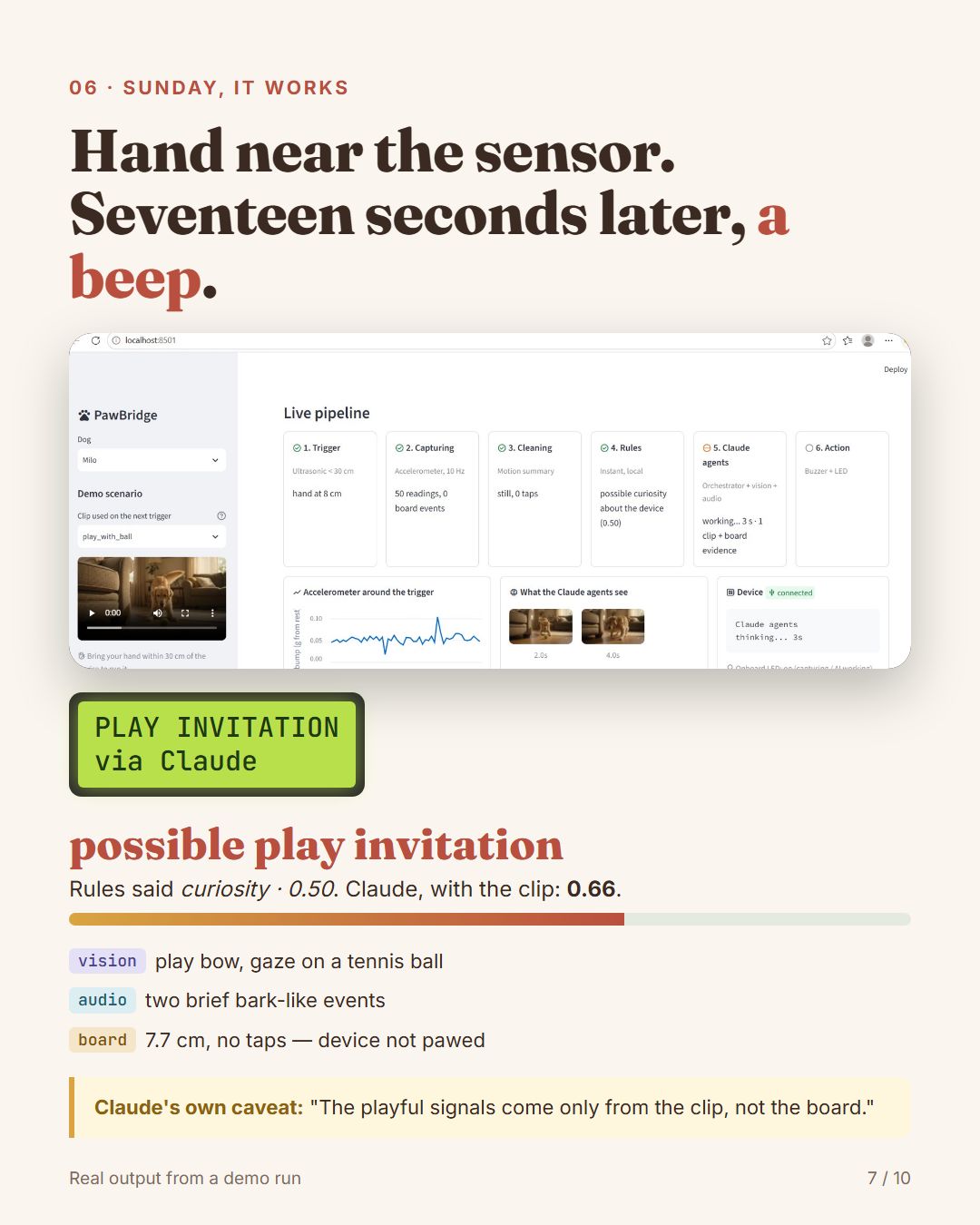
sunday, it works.
Hand near the sensor. Seventeen seconds later, a beep.
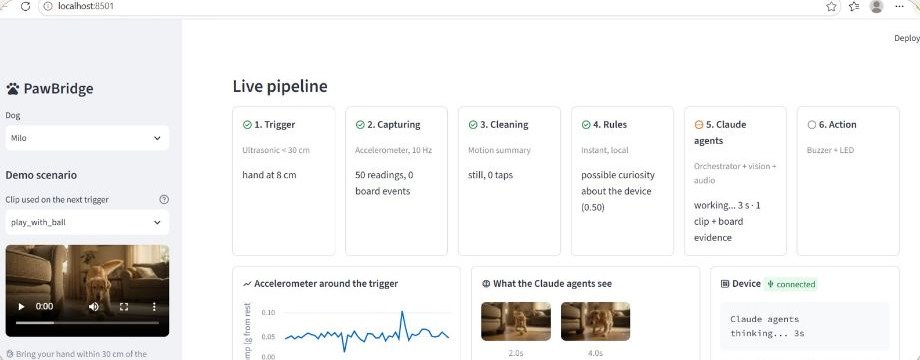
The live dashboard: trigger, capture, cleaning, rules, Claude agents and action, step by step.
via Claude
possible play invitation
Rules said curiosity · 0.50. Claude, with the clip: 0.66.
- visionplay bow, gaze on a tennis ball
- audiotwo brief bark-like events
- board7.7 cm, no taps — device not pawed
Claude's own caveat: “The playful signals come only from the clip, not the sensor board.”
what we learned.
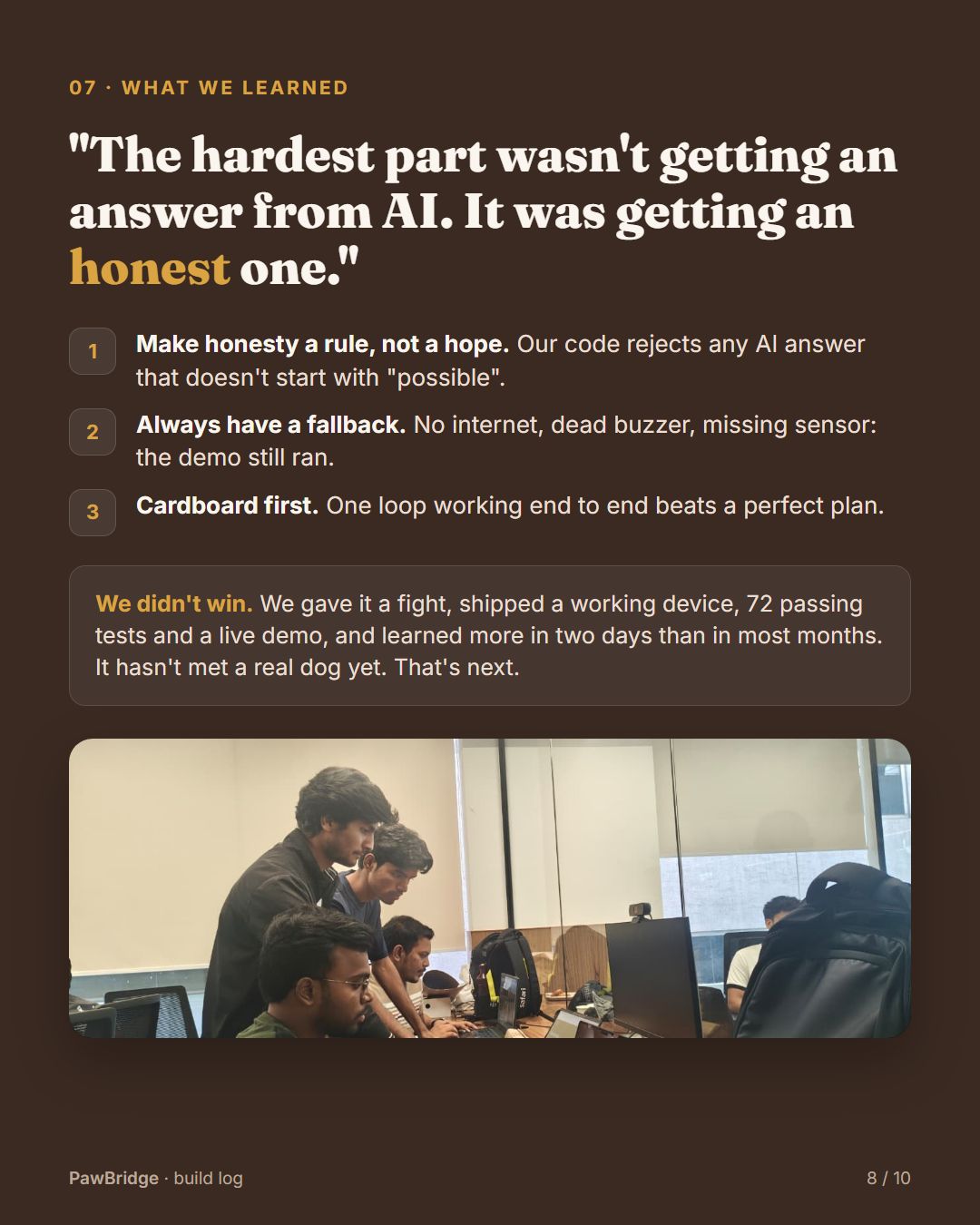
“The hardest part wasn't getting an answer from AI. It was getting an honest one.”
- 1Make honesty a rule, not a hope. Our code rejects any AI answer that doesn't start with "possible".
- 2Always have a fallback. No internet, dead buzzer, missing sensor: the demo still ran.
- 3Cardboard first. One loop working end to end beats a perfect plan.
We didn't win. We gave it a fight, shipped a working device, 72 passing tests and a live demo, and learned more in two days than in most months.
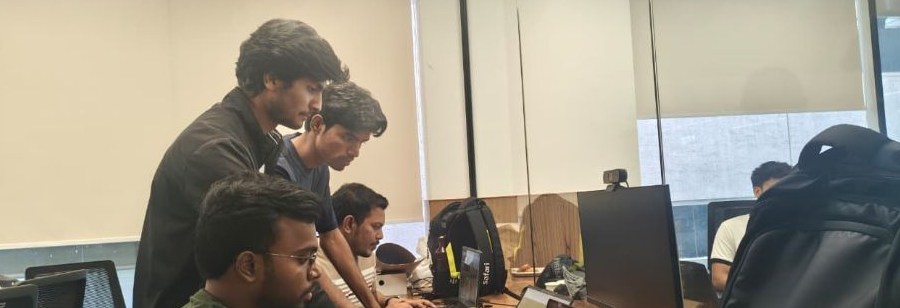
the team.
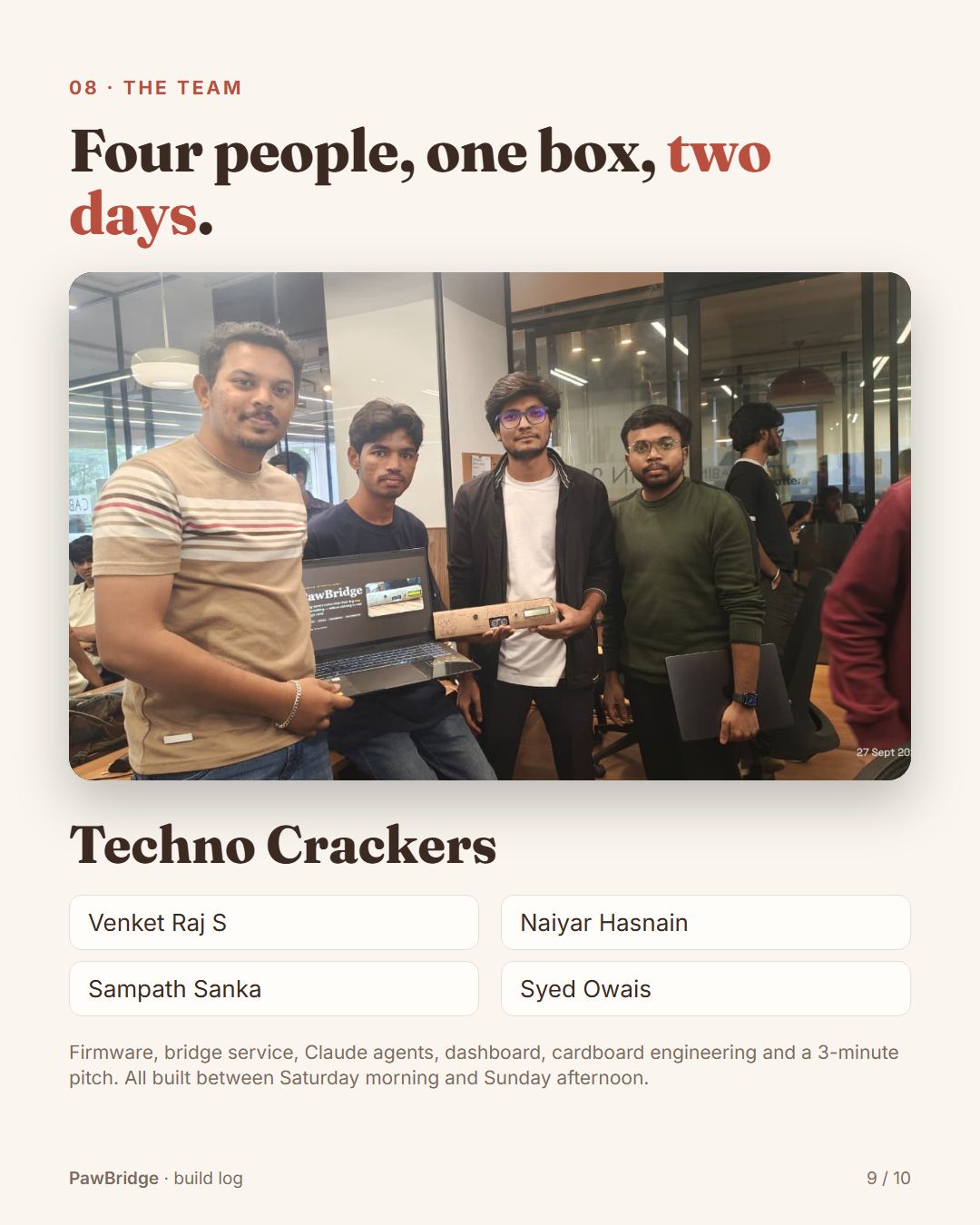
Four people, one box, two days.
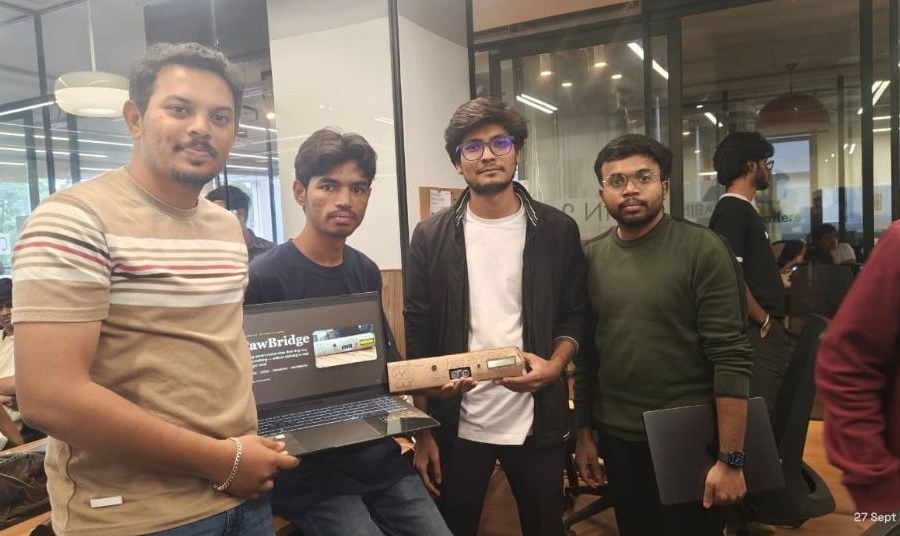
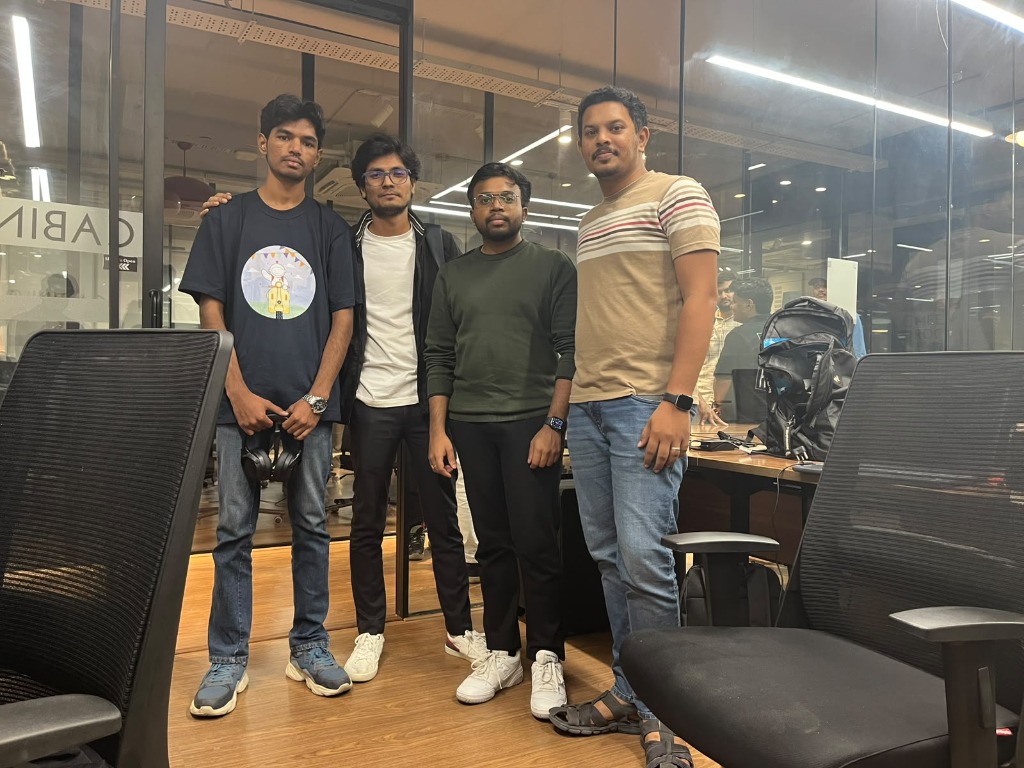
Team Techno Crackers
- Venket Raj S
- Naiyar Hasnain(me)
- Sampath Sanka
- Syed Owais
Firmware, bridge service, Claude agents, dashboard, cardboard engineering and a 3-minute pitch. All built between Saturday morning and Sunday afternoon.
the build log.
The full carousel from my teammate Venket Raj S's LinkedIn post. Tap a slide to open it full size.
thank you.
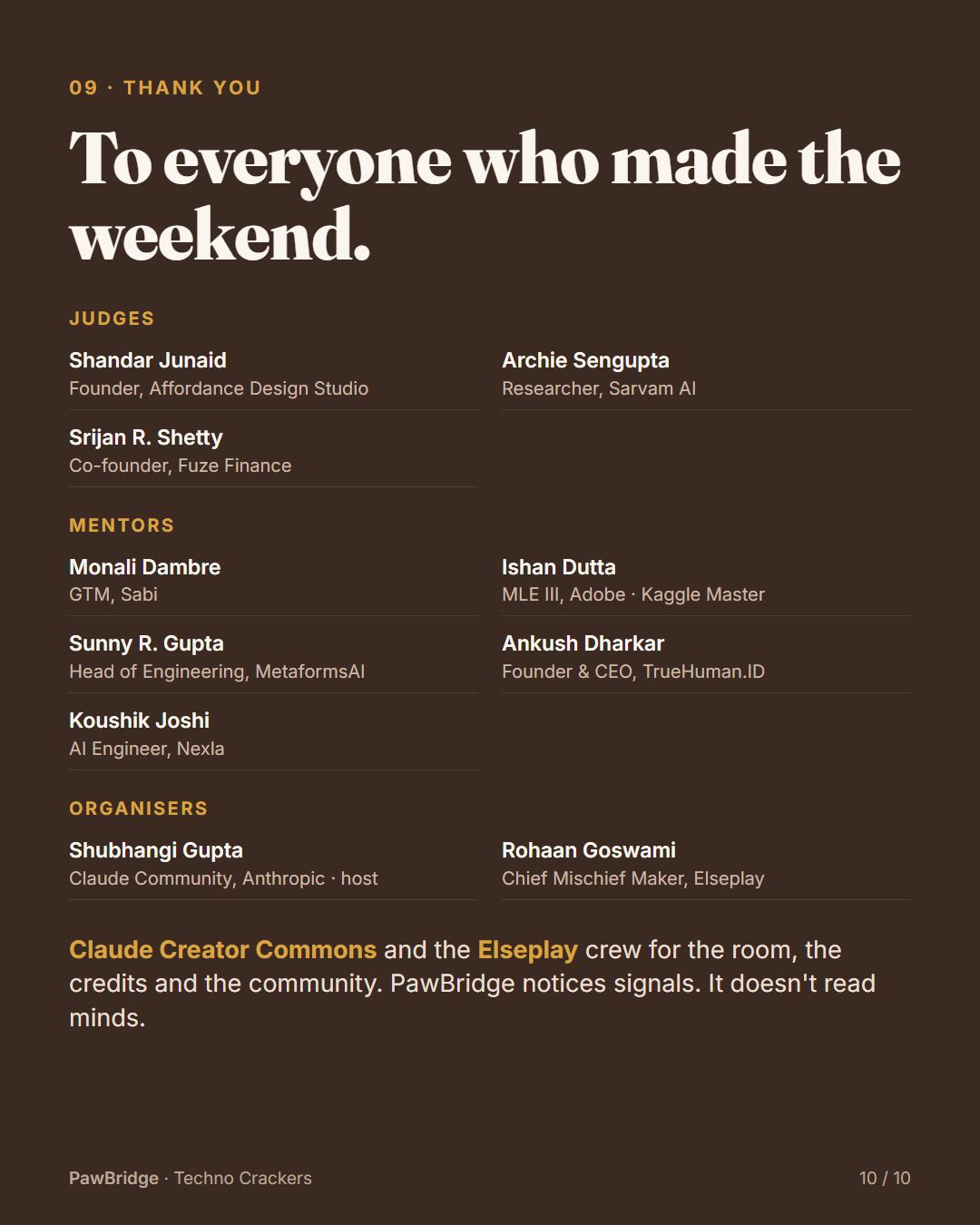
Judges
- Shandar Junaid
- Archie Sengupta
- Srijan R. Shetty
Mentors
- Monali Dambre
- Ishan Dutta
- Sunny R. Gupta
- Ankush Dharkar
- Koushik Joshi
Organisers
- Shubhangi Gupta
- Rohaan Goswami
- the Elseplay crew
And Claude Creator Commons for the room, the credits and the community. PawBridge notices signals. It doesn't read minds.